|
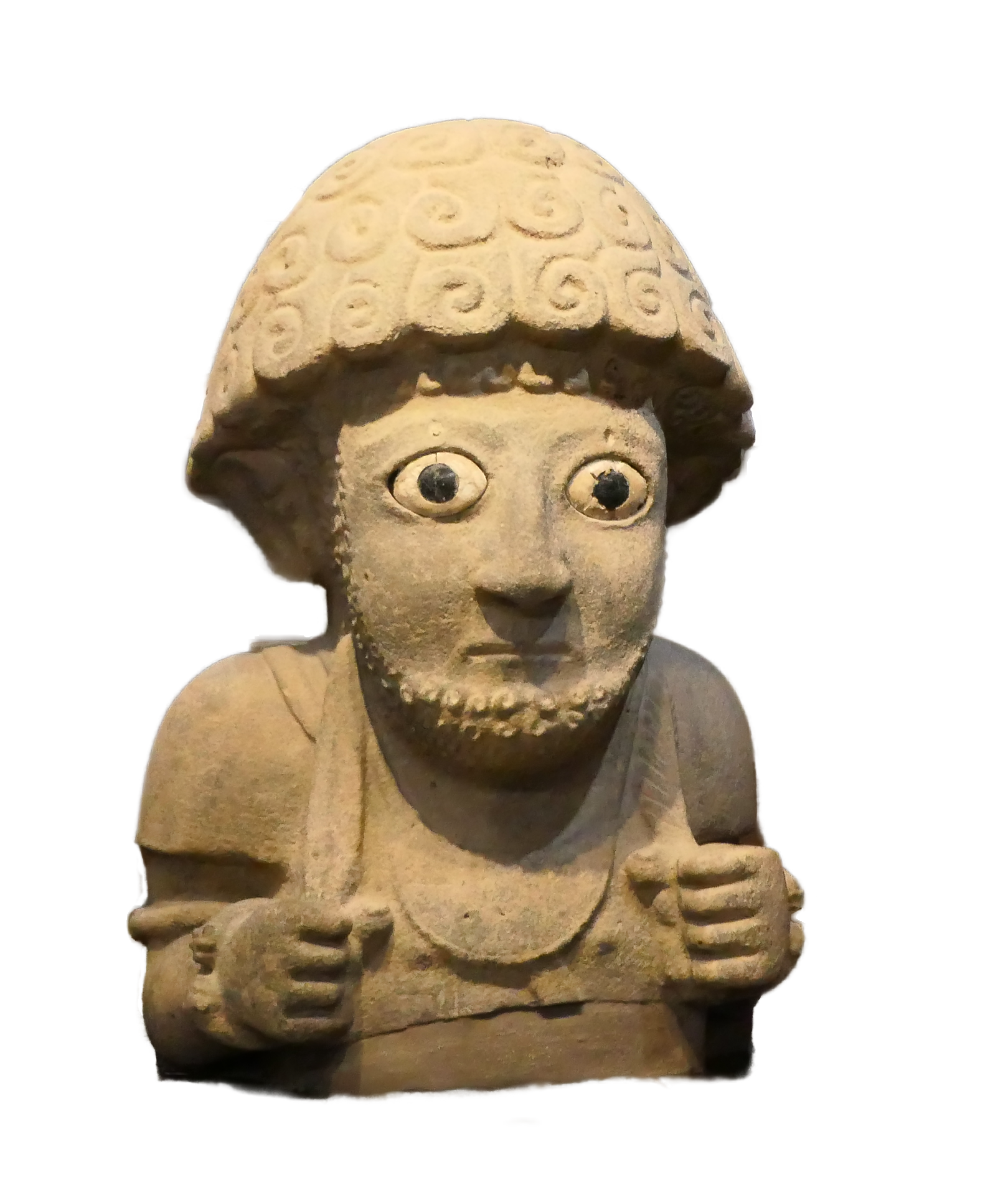
Statute of
Suppiluliuma, a Neo-Hittite king of the state of Pattin in southeastern Turkey during
the mid-9th century BC. Not to be confused with the earlier Suppiluliuma II, the last
ruler at Hattuša around 1200 BC.
Archaeological evidence
supports the existence of early Canaanite-Hittite relations. While only a handful of
Hittite inscriptions have been recovered in the land of Canaan (versus far more just
outside its borders, in Syria), these are still significant. The first find of a
Hittite seal impression (bullae) in Israel, at Aphek in 1976, was near a Late Bronze
Age palace. The inscription referred to a “king and child,” suggesting it belonged
to a prince or princess.
As already noted, two of the greatest regional powers in the Canaanite period were
the Hittites and the Egyptians. The Hittites, northerners, and the Egyptian
southerners both had vested interests in the Land of Canaan. Ideally, each wanted
to rule this middle region, but this was difficult as the land was near the limits
of their territorial reach. So, rather than direct rule, supporting local cities
and states allowed them access to what effectively became a buffer zone between
the two major kingdoms.
Hittite travelers, merchant traders, and diplomatic envoys passed through Canaan on
their way to Egypt. At Megiddo, an important stop on the route between Hatti and
Egypt, archaeologists discovered an ivory Hittite panel in a larger collection of
ivories from the palace treasury. Also, they found a seal belonging to a charioteer
named Anuziti, a Hittite diplomat. Showing similar trade and influence from the south,
Egyptian artifacts are common to Megiddo as well.
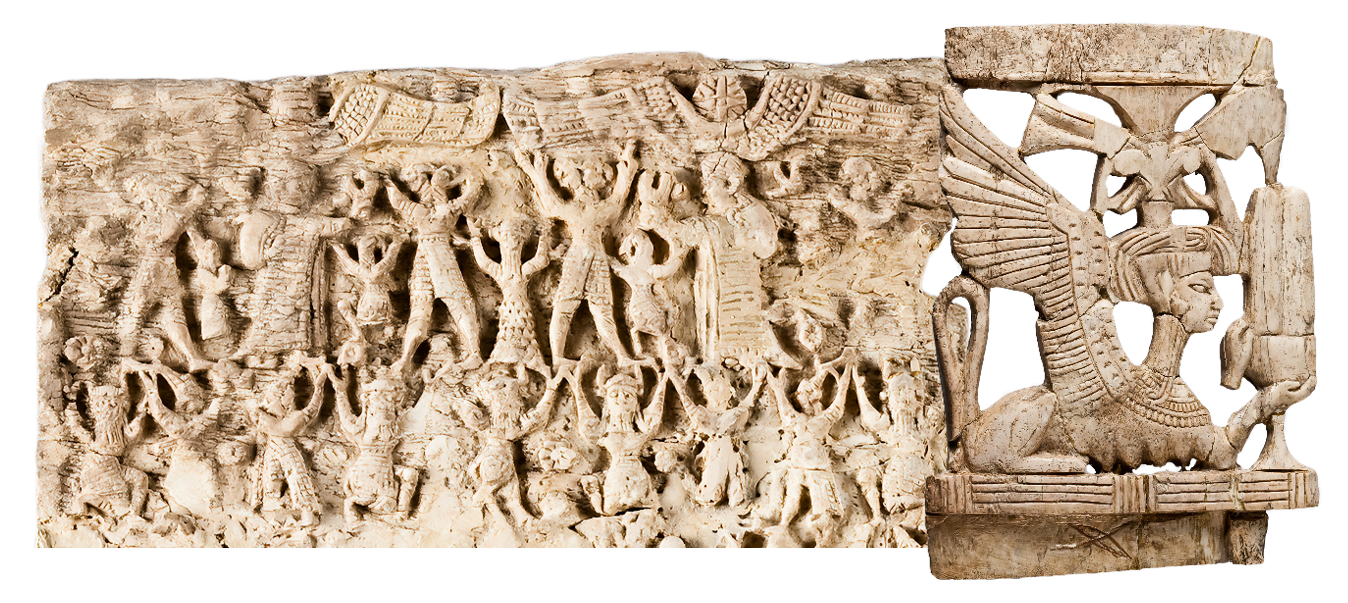
Hittite and
Egyptian Ivories from Megiddo. ISAC Museum, Chicago.
Hittite involvement in the area continued through the period of the Judges (Judges 3:5;
Joshua 15:63). Egypt and the Hittites fought a major battle on the northern side of
Canaan in 1274 B.C., during the period of the Judges. The Battle of Kadesh caught
Pharaoh Ramesses II by surprise, in an attack led by King Muwatalli II and his brother
(and future king) Hattusili III. Wall reliefs at Karnak temple describe the battle and,
predictably, proclaim an Egyptian victory. In reality, the battle was probably a draw.
The Egyptian army eventually abandoned Kadesh and retreated to Damascus. A short
thirteen years after the battle of Kadesh, Egypt and the Hittites signed one of the
oldest known peace treaties, ending centuries of hostility and bloodshed. Archaeologists
discovered the Hittite version of the treaty (written in cuneiform) in the ruins of the
royal place at Hattusa (now on display in the Istanbul Archaeological Museum).
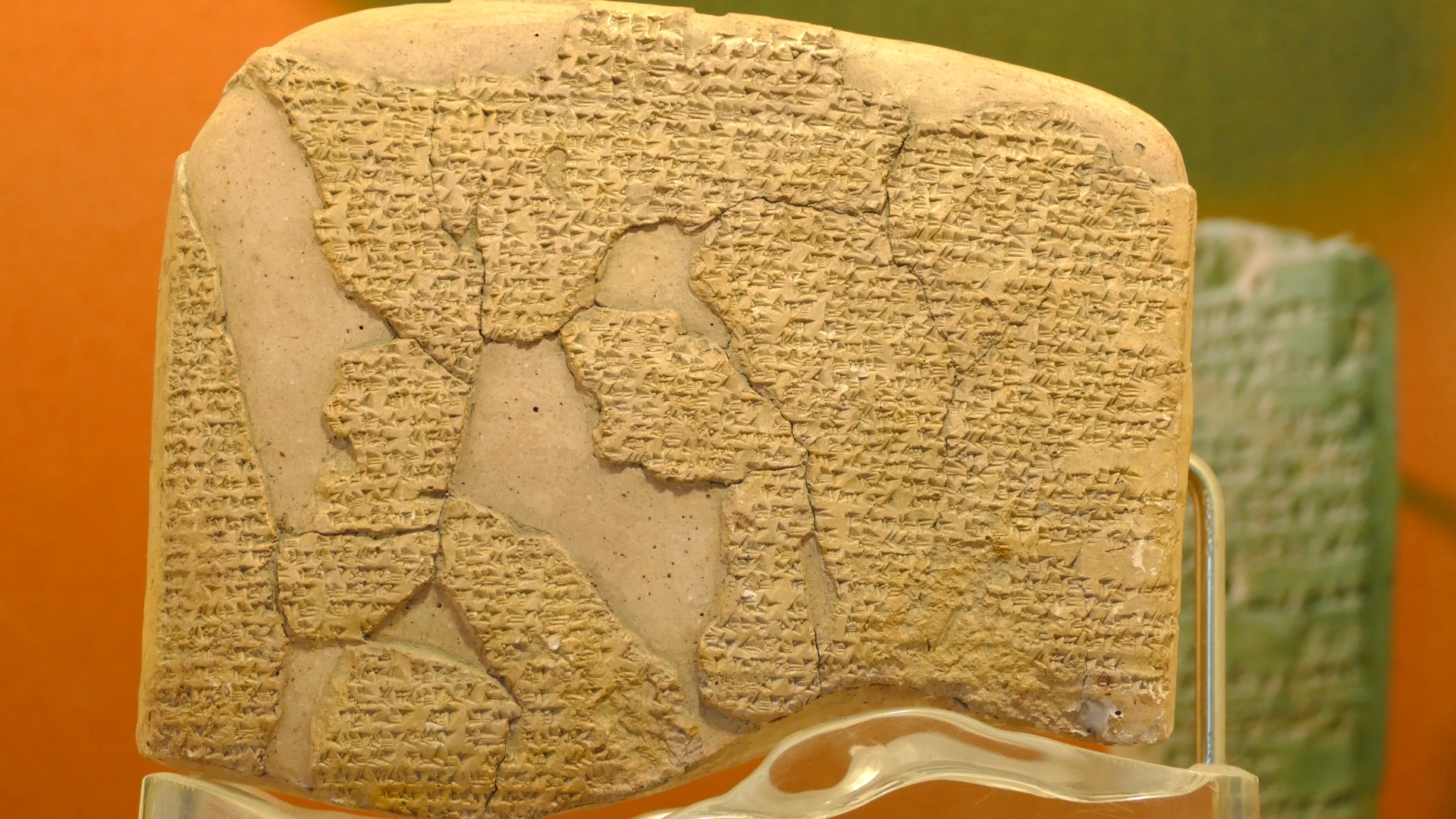
Hittite-Egyptian
Peace Treaty, between Pharaoh Ramesses II of Egypt and King Hattusili III of the
Hattuša-based Hittite Empire around 1259–1269 BC.
The Egyptian version appears on the walls of Ramesses’ Mortuary Temple and in the Temple
of Amun at Karnak. The Hattusa and Egyptian versions varied in wording. Egypt said
the Hittites sued for peace; the Hittite version said the opposite; otherwise, they were
the same. (The Security Council of the United Nations seems to have taken sides on this
dispute, since it placed a replica of the Hittite version at the entrance to its
headquarters in New York).
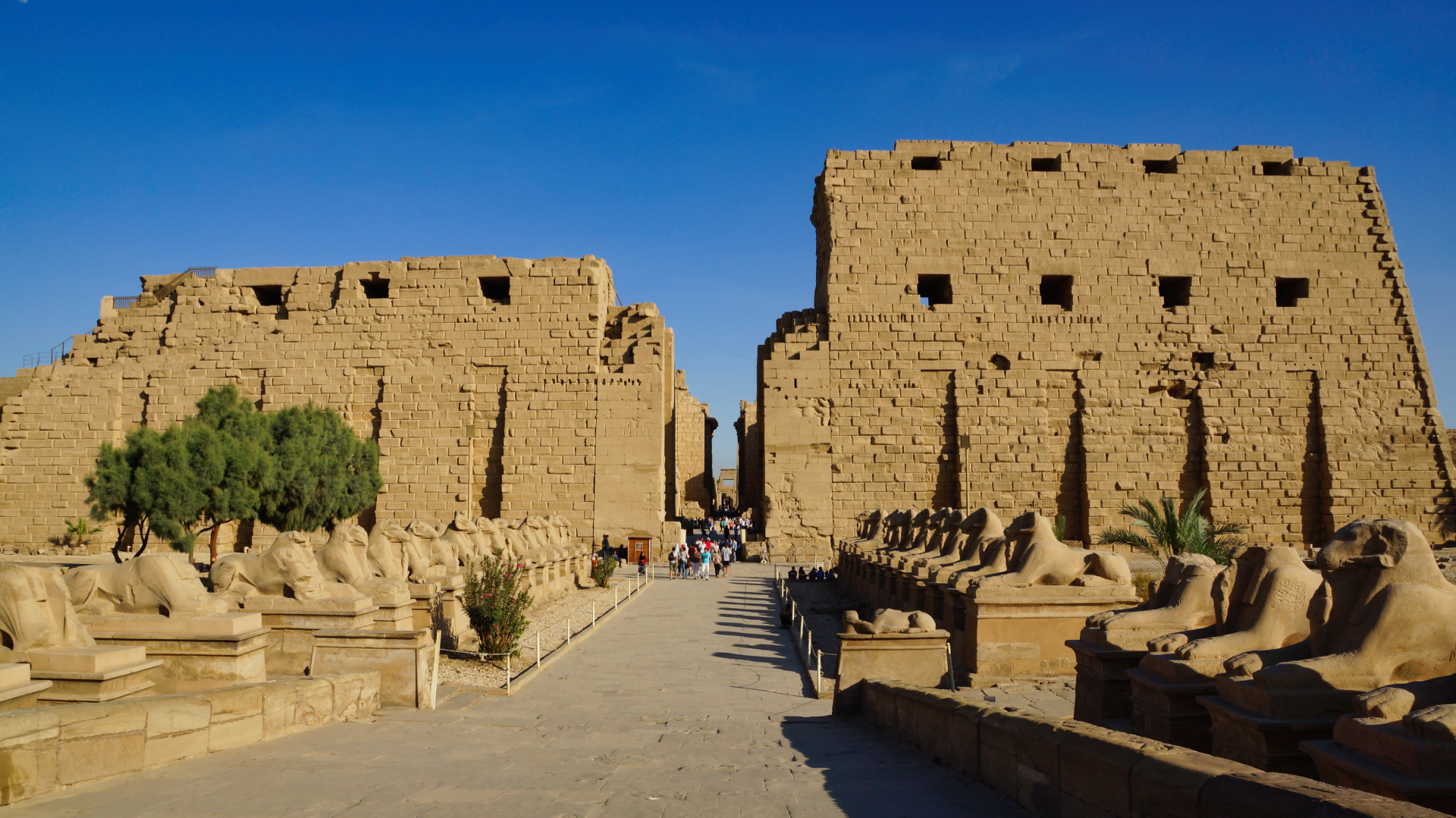
Karnak Temple,
Egypt.
An early name for Jerusalem is Salem, dating to the time of Abraham and Melchizedek
(Genesis 14:18; Hebrews 7:1). The city became known as Jerusalem during the late
Canaanite period, when it was controlled by the Amorites (See the account of Adoni-Zedek
in Joshua 10:1, 3). Afterward, when Israel’s Judges reigned, Salem was now Jebus
(Judges 19:10-12).
The Jebusites were relative newcomers to the region, not long before Israel returned to
the Promised Land. They are listed as inhabitants of the hill country at the eve of the
conquests (see Joshua 11:3; Numbers 13:29). The Jebusites were likely mostly Hittites,
or people mixed with Hittites, recently displaced or migrants from areas further north
(such as northern Syria).
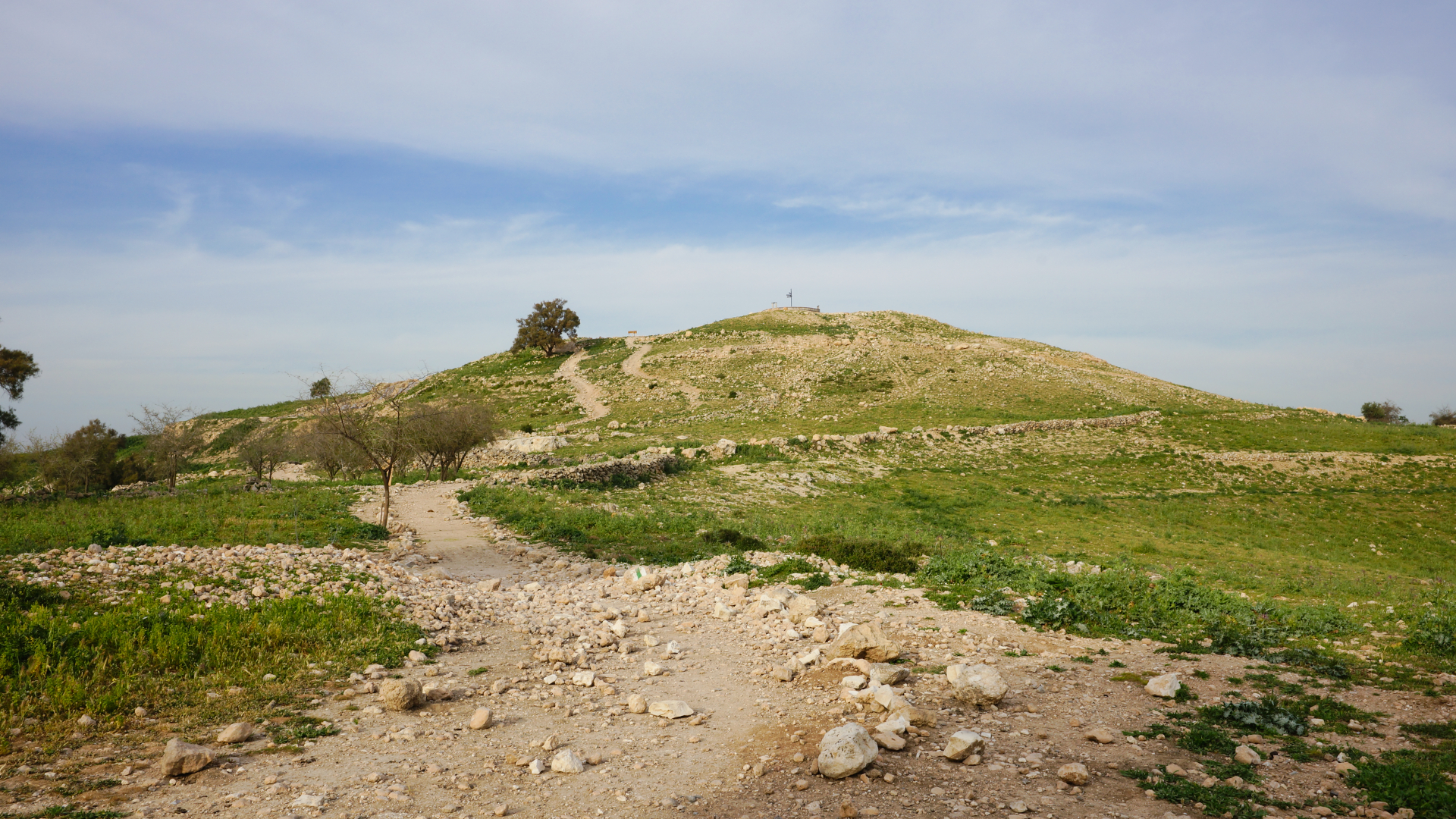
Gath of
the Philistines (Tel Tsafit), Israel.
Invasions of the Sea Peoples in the early 13th century BC sparked this southward
immigration. (The Sea Peoples were later mostly known as the Philistines). Weakened
by the Israeli conquests, the Canaanite kingdom of Jerusalem succumbed to these
northern newcomers, whether by defeat, merger, or attrition. The Bible provides a
significant clue that the Jebusites were also Hittites, as it has the prophet Ezekiel
prophesying that both the Amorites and the Hittites were the ancestors of Jerusalem
(see Ezekiel 16:3).
Israel did not conquer Canaanite Jerusalem during the conquests of Joshua or under the
later Judges. No record exists of King Saul even trying. When the Canaanite city
finally fell to David and his men, David did not wipe out the inhabitants (perhaps
because of a previous friendship with a Hittite; see 1 Samuel 26:6). Afterward,
Hittites appear casually in accounts about Israel. For example, King David has an
officer named Uriah the Hittite. After having an affair with his wife, David has
him killed (to cover up the deed) and later marries Uriah’s widow.
David also bought a parcel of land from a man named Araunah the Jebusite (2 Samuel
24:16-24). Araunah’s land was prime real estate on the northern side of Jerusalem. Why
would a Jebusite own perhaps the best location for grain threshing near Jerusalem? The
way the text references this man, calling him Araunah, is the clue.
The Holman Bible Dictionary claims Araunah to be a “personal name of unknown
meaning.” Labeling it a personal name is speculative, something commonly done in the
absence of evidence. Further, attributing an unknown meaning to Araunah is possible
only by limiting any examination to the immediate Hebrew and Semitic roots. The NAS
Hebrew Dictionary, following this pattern for investigation, notes that the word is
of uncertain derivation.
Adding to the confusion, the Bible provides another name, Ornan, in a parallel passage
(see 2 Chronicles 3:1). Eerdmans Dictionary claims this name is merely an alternate
form of Araunah, as though both were personal names. Making them equal, as alternates,
is as speculative as claiming the former a personal name. At least, Eerdmans is
following the long-standing practice of interpreters and translators: the ancient
Greek Septuagint harmonizes the names, making them identical.
A seemingly unlikely, non-Canaanite source sheds light on the Semitic name problem:
Araunah means “king,” “lord,” or “prince” in the Indo-European Horite-Hittite or
Hurrian-Hittite language. Rather than a personal name, Samuel’s author likely used
a title. His proper, or personal, name was likely Ornan, as used by the Chronicler
(1 Chronicles 21:15).
Following David’s men taking the city through the water system (2 Samuel 5:6-9), the
Jebusite city likely then surrendered to him, including its king. This would explain
why no further battle details appear in the text. This Araunah, their Jebusite or
Hittite king, then becomes an ally, and the Jebusite David buys the land from.
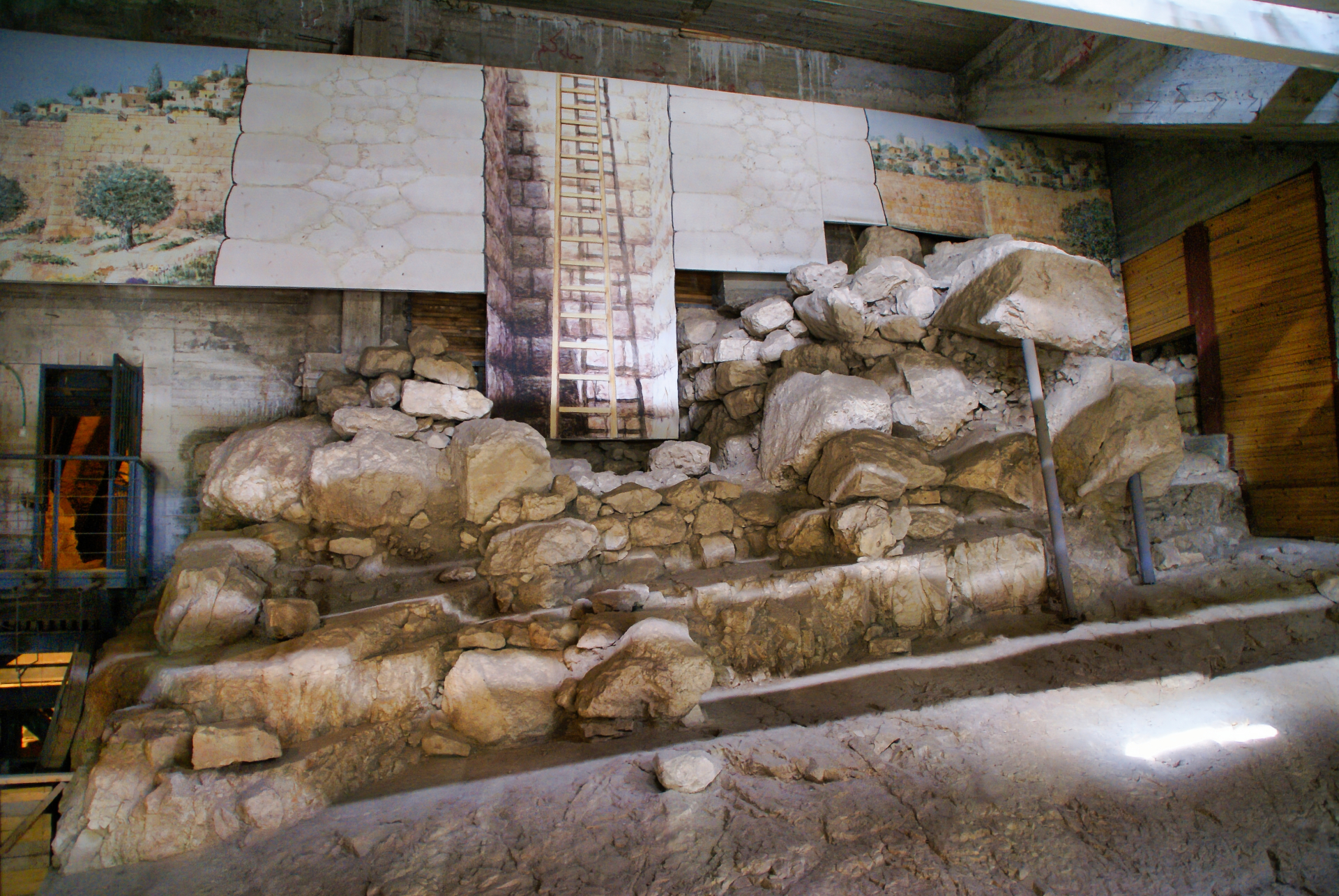
Gihon Spring
Tower Ruins, Jerusalem.
Returning to the Holman Bible Dictionary, after calling Araunah a name of unknown
meaning, it makes Ornan equal to Araunah, as if they were variants of the same word,
by stating that the meaning of Ornan is “prince.” To arrive at this, they would have
had to recognize the Hittite meaning of Araunah. Per other linguists, Ornan, as a
personal name, does have a Semitic meaning: “strong” or “agile,” not “prince.”
Soon after, David’s son, King Solomon, likely married a daughter (or daughters) of
Araunah’s former Hittite royal family as part of his efforts to secure political
stability. Solomon’s first marriage to Pharaoh’s daughter was equally a political
alliance (1 Kings 3:1). The Bible singles out the “foreign women” Solomon married
(1 Kings 11:1). The text first notes Pharaoh’s daughter, then lists Moabite,
Ammonite, Edomite, and Sidonian. Each made sense, as they were people living in
neighboring areas of Israel or under expanding Israeli control in Solomon’s time.
The final foreign label, Hittite, superficially appears to show an alliance with the
Hittite Empire far to the north, a mistaken idea. Again, their empire had effectively
crumbled long before Solomon’s time (for example, their capital city of Hattusa,
destroyed around 1200 BC, remained in ruins). Evidence shows that weaker, more
isolated Neo-Hittite states persisted in the region into the early Iron Age, but
their influence was primarily cultural rather than political. Solomon’s foreign
Hittite wife was more likely because of an internal Hittite presence in Israel, the
remains of the Jebusites, than any alliance with the Hittite remnants in the far
north. It possibly could be associated with one of the Syro-Hittite bordering kingdoms.
All the Bible records about the Hittites in the Law, the Book of Judges, and the early
United Kingdom of Israel are reasonable and probable within their historical setting.
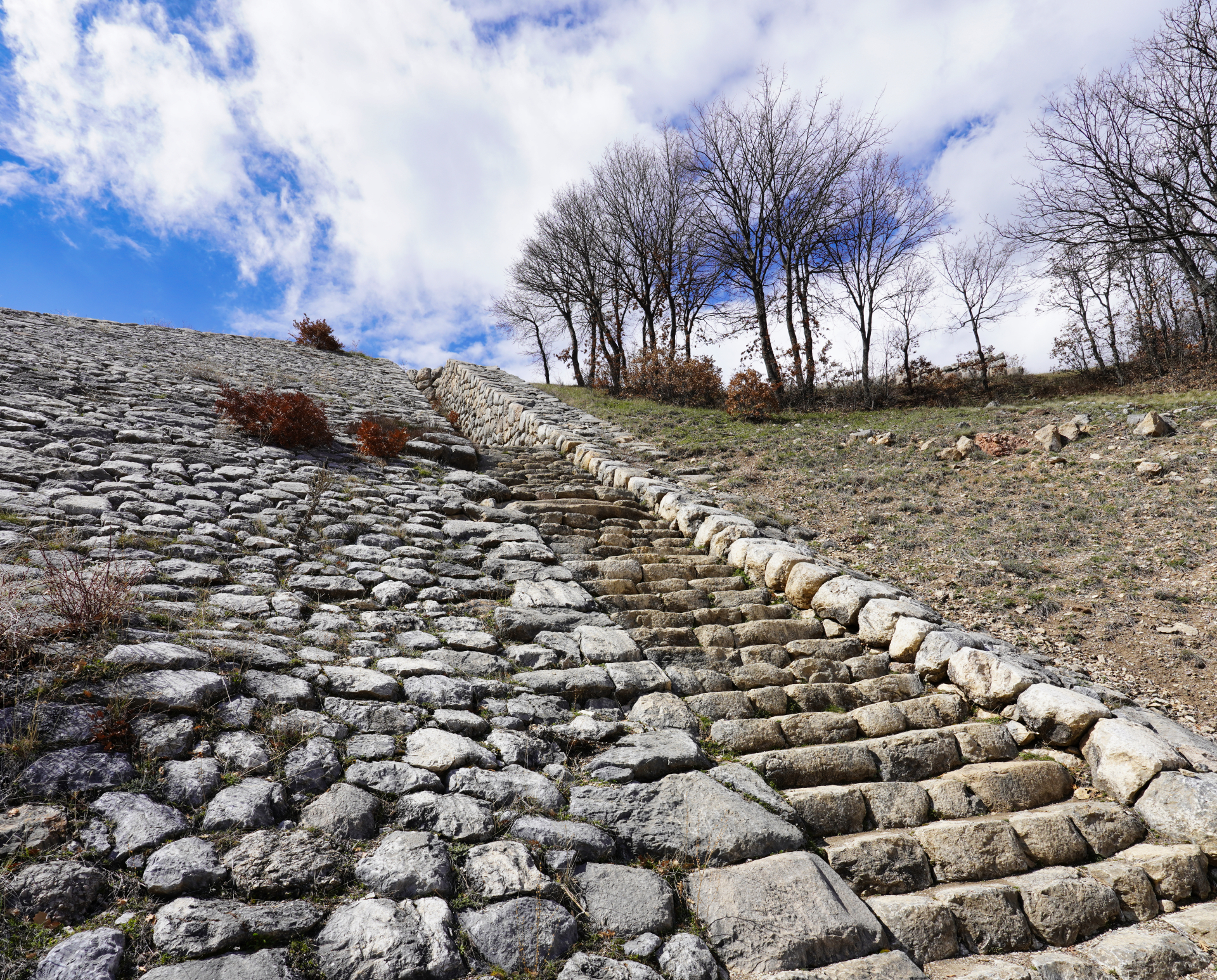
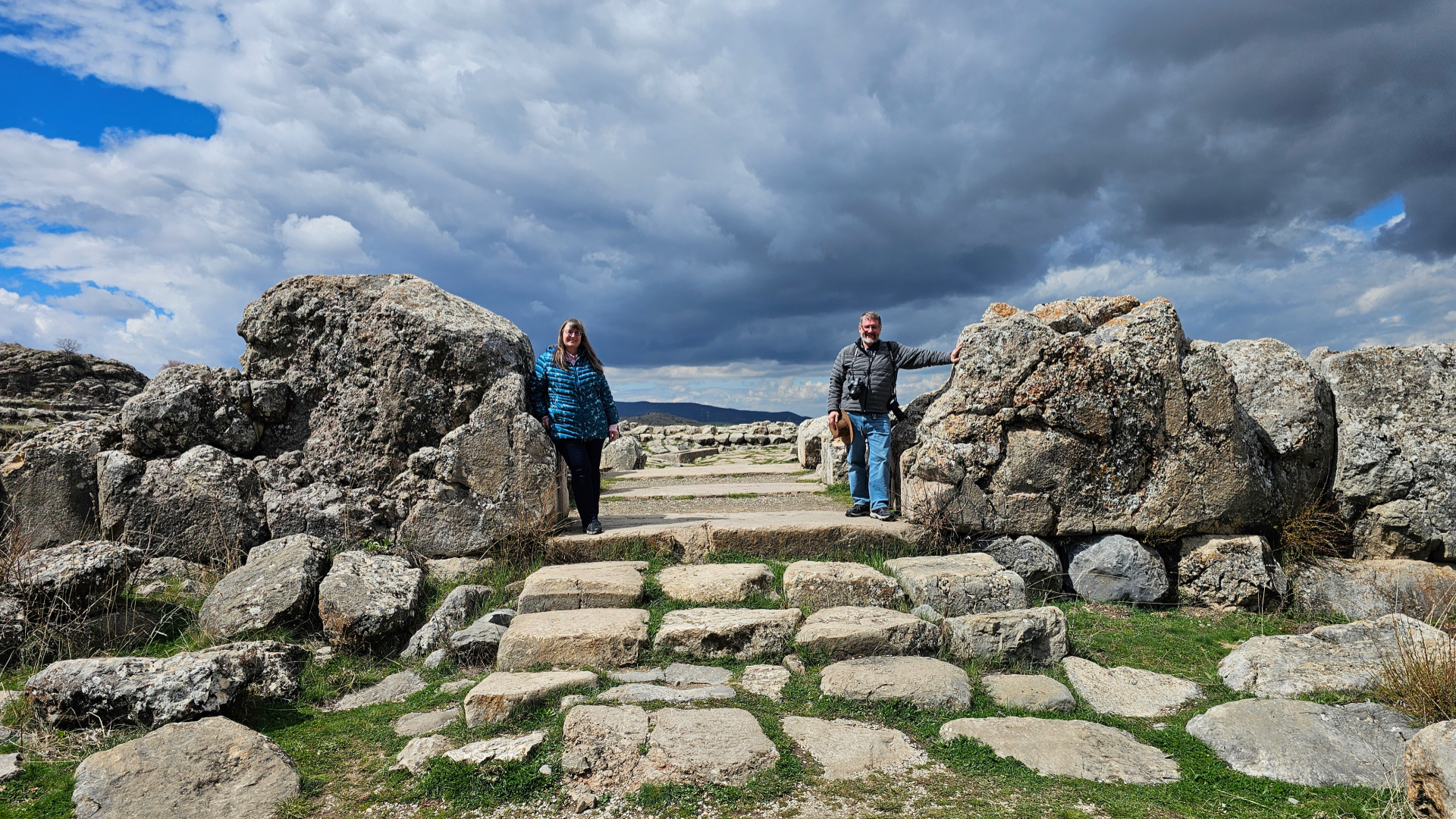
Stone stairway
ascending the high wall in Hattuša’s Upper City.
Article by Brent
MacDonald, (c) 2026
Not Just Another Book (Cottage Cove's Discipleship Training Institute) |